
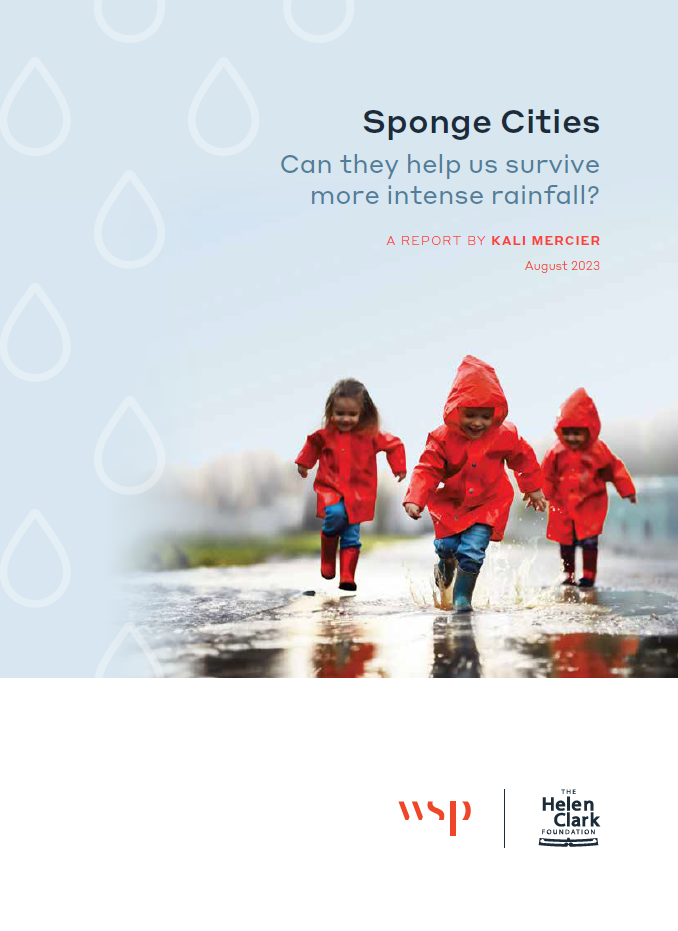
Sponge Cities: Can they help us survive more intense rainfall?
A webinar to discuss why Sponge Cities should be part of the solution to building flood resilient urban spaces in New Zealand.
24 August 2023 at 00:30
Online Webinar
Event Recording
This was a public webinar. You can watch a video of the webinar above, or listen to it in podcast form here.
Could Sponge Cities offer a solution to help Aotearoa New Zealand deal with more intense rainfall caused by climate change?
The sponge city approach aims to sustainably manage water resources in our urban centres. It requires cities to work with water rather than against it, using green infrastructure, minimising impervious surfaces, ‘daylighting’ streams, and more. By creating space for water, these approaches complement conventional engineering solutions.
The Auckland floods and Cyclone Gabrielle have highlighted our vulnerability in the face of the increased flood risk. Adapting New Zealand’s cities will be a complex task – and require tough decisions on how we build in the future. In this webinar we explored:
- Why Sponge Cities should be part of the solution to building flood resilience in New Zealand urban spaces.
- Practical small and large initiatives to make our cities “spongier” that we could start today.
- Policy recommendations, such as excluding vulnerable flood-prone areas from development, and incorporating mātauraunga Māori knowledge to achieve solutions that enhance biodiversity and promote human well-being.
Our expert panel included:
Kali Mercier, WSP Fellow, Deputy Director of the Helen Clark Foundation and report author. Kali is a public policy researcher with a background in law, policy, and international development. Kali began her role at WSP and the Helen Clark Foundation earlier this year. Previous roles include Principal Advisor at the Ministry of Justice, Policy Director at the NZ Drug Foundation, and human rights advocate for Amnesty UK and other charities overseas..
Reginald Proffit, WSP Pou Arataki – Director Māori. Reginald leads the execution of WSP’s Rautaki Māori (Māori Strategy). Previously, Reginald was the Business Manager of WSP Gisborne, a team of 16 civil, structural, geotechnical and water engineers and laboratory technologists. He has extensive resource management planning experience, practises as an Independent Hearing Commissioner, and is currently the Chair of Te Kokiringa Taumata | New Zealand Planning Institute.
Liam Foster, WSP Technical Principal – Water. Liam is a Chartered Environmentalist and Chartered Scientist specialising in sustainable water management, surface water and flood risk management. He is a Fellow of CIWEM and has over twenty years of experience in water cycle and strategic water policy and planning. Prior to joining WSP in New Zealand, Liam worked across the water environmental and water industry within the UK.

The Impact of Your Support
Your support makes everything we do possible - from producing new research and policy ideas, to hosting our honorary fellows programme, to running public events and member-only webinars that bring people together for meaningful conversations about New Zealand’s future.
37+
Major Reports Published
90+
Events Hosted
50+
Significant Media Appearances in 2025
12,500+
Individuals engaged with our Research