
Beyond The Crisis - Keep Looking To Asia
Honorary Fellow Stephen Jacobi highlights the key importance of major relationships in Asia especially in these troubled times.

Stephen Jacobi
15 April 2026
This blog post was originally published on Newsroom. Stephen Jacobi is an Honorary Senior Fellow at the Helen Clark Foundation.
“Events, dear boy, events!” That was the rejoinder from British Prime Minister Harold MacMillan to a question about what might derail even the best government strategy. The world today is consumed by events - Ukraine, Gaza, Iran and the Gulf. The resulting disorder may appear to have come from nowhere but arises from the slow but steady erosion of the rules of the former “order,” such as it was. With the fuel crisis, we face a new upending of the global economy. We’ve been here before and not too long ago: during the global pandemic, “supply chain” became an everyday term. Now, as then, we have little choice but to manage the crisis as best we can, while seeking to secure our interests in the medium term. Now, as then, we in Aotearoa need to look to Asia.
Three Asian economies stand out for New Zealand at this time. Singapore, our long-term comrade in arms in the quest for freer trade, takes on heightened relevance as we rush to secure fuel supply (and as they look to secure food). India is the focus of attention as we seek to wrap up a long-awaited free trade agreement. And then there is China, which has become indispensable as the growth engine which keeps the whole region afloat. Japan and South Korea deserve honourable mentions as fellow democracies and partners who are important for trade and investment as well as energy security.
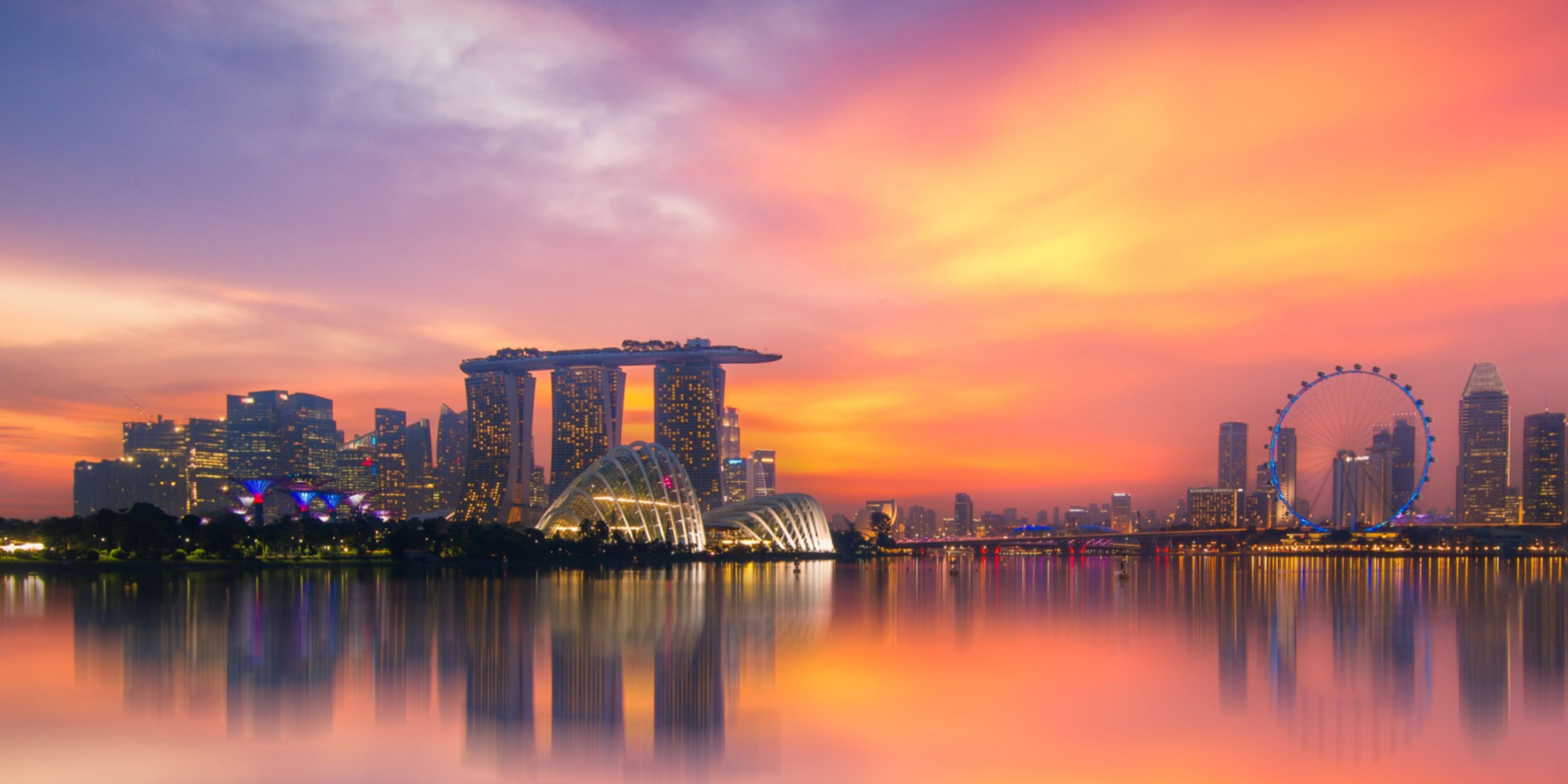
Singapore’s strategic location means it finds itself at the centre of geo-political rivalry and carefully balancing close relationships with the United States and China. It has pursued a strategy of “multi-engagement” to shore up its interests – it’s pretty much what we might call an independent foreign policy. Even so, Singapore’s leadership has been noticeably more out-spoken with its concern about the implications of the US action against Iran.
Like New Zealand, Singapore is a firm believer in multilateralism as the insurance policy smaller economies rely on in an uncertain world. Openness is also seen as the best way to manage the economy. Singapore and New Zealand have no less than six co-existing and complementary FTAs with each other and are partners in all the recent initiatives to maintain the momentum of a rules-based order for trade. During the pandemic, Singapore and New Zealand negotiated a supply chain agreement which today serves to bolster confidence in managing the risks we both face from disruptions to shipping.Once the dust settles, there is surely more that needs to be done with Singapore, perhaps, along with our CER partner Australia, extending to them the benefits of our trans-Tasman single economic market.
There is good reason for the attention being paid to India right now. Our interest in a deeper economic relationship goes back to April 2010. Sixteen years later, third time lucky, we now have an agreement on the table. One thing is now clear: this is the time to bring the FTA home, we will not get another chance. India has already moved onto other, much bigger partners like the EU. We can benefit from their success when in certain areas like wine and services those outcomes apply to us also – if the FTA enters into force, that is.
Visa arrangements are a minor part of the agreement – contrary to political spin, more skilled temporary workers will help not hinder the economy. The undertaking to make considerable private sector investments in India over fifteen years is admittedly unclear - if this causes a problem down the track, it will need to be managed at the time. Provided the text confirms our Government’s view that this is aspirational at best, it should not prevent proceeding at this point. Creative ambiguity is often needed to get complex trade agreements across the line. Trade may not increase as exponentially under this FTA as we saw with China earlier, because some major sectors are only partially liberalised. But investment is another matter: that’s where New Zealand companies can get the greatest benefit from close alignment with India’s innovation engine. We have everything to gain and not a lot to lose by moving forward with this agreement.
China continues to hold economic opportunity for New Zealand. China’s economy is changing but is still well placed to weather the current economic storm. Our comprehensive FTA, almost twenty years old, transformed our economy. Trade with China kept the economy running during the pandemic. China’s middle class continues to grow, and with it their strong demand for dairy, meat, kiwifruit and other nature-based products. We have commanding positions in a number of segments in the Chinese market. More tourists would come if only the New Zealand Government made it easier and cheaper to obtain visas.
China should be more than a customer – it can help us with infrastructure challenges, climate response and technological advancement. More than ever, we need to work out what kind of relationship we want with China. There is understandable reticence about some of China’s domestic and foreign policies, but that same reticence is not applied to other partners. A more broadly based relationship with China will help offset and de-risk the impact of the differences which will doubtless arise. China is under no illusions about the things New Zealand cares about in the world. Active engagement, consistency and mutual respect are ways we can ensure New Zealand’s values are kept to the fore and the relationship lives up to its potential.
Who can say how current events will turn out? Each crisis gives us reason to pause and reconsider our options in a context where others are largely calling the shots. No country can afford to ignore the international dimensions of its own security, but it is in our interest to avoid entanglements which might see us playing to others’ agendas. In times of crisis and economic peril our independent foreign policy bolstered by deep and diverse relationships should be the basis of the security we seek. Our key relationships in Asia – those mentioned above and others throughout the region - require constant nurturing as a counter-weight to instability, uncertainty and risk.
Keywords

The Impact of Your Support
Your support makes everything we do possible - from producing new research and policy ideas, to hosting our honorary fellows programme, to running public events and member-only webinars that bring people together for meaningful conversations about New Zealand’s future.
37+
Major Reports Published
90+
Events Hosted
50+
Significant Media Appearances in 2025
12,500+
Individuals engaged with our Research