
It’s time the law caught up with society on consent
Most of us agree on the basics: communicate, don’t assume. When legal standards diverge from social standards, confusion follows.

Dr. Anna High
19 December 2025
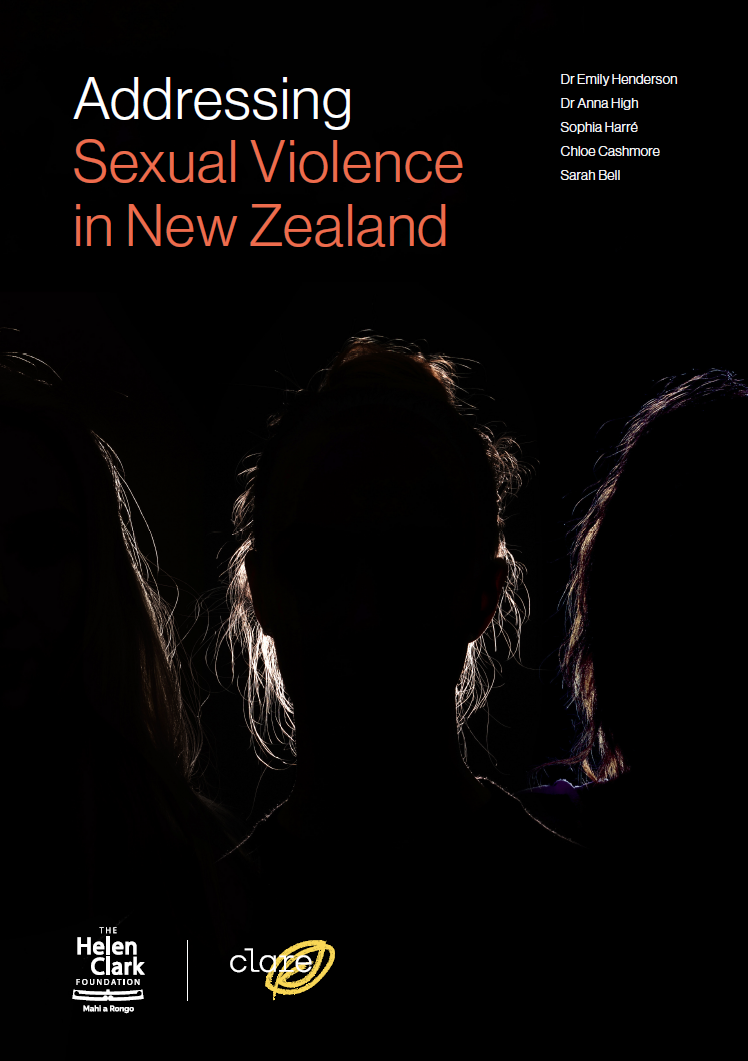
This piece, by Dr. Anna High, was originally published in Newsroom. Anna is one of the co-authors of our report, Addressing Sexual Violence in New Zealand.
Consent is widely understood as something that is active – a “yes” that is communicated through words or actions – rather than something we can just take a punt on.
This is the “yes means yes” ideal. It’s not enough to stop only when there’s a “no”; we need to look for a clear “yes”.
That’s the social standard many of us teach our children and expect in our relationships. Yet to some extent, our law lags behind.
Under the Crimes Act, consent to sexual activity is not defined. Instead, the law lists situations where “allowing” sexual activity does not amount to consent – such as being asleep or too drunk to choose.
But in some cases, the courts have said consent can be assumed even when a person has not communicated their free and willing agreement. In some scenarios, the burden still falls on the person who is not consenting to communicate “no”, rather than on both people to share a clear “yes”.
This matters immensely. First-hand accounts and research tell us that many victims freeze during sexual assault. If the law leaves room to treat silence as consent, we risk failing those who cannot speak up. It also matters because the stakes are so high. When it comes to sexual intimacy, the law should not allow people to make assumptions instead of communicating.
This month, the Helen Clark Foundation released an important report, Addressing Sexual Violence in New Zealand, funded by the Clare Foundation. The report, which I co-authored, highlights a number of areas in which New Zealand’s laws and policies could be improved to close gaps with best practice.
One such area is the law of consent. The reform I’ve advocated for in this report is straightforward: fully adopting affirmative consent. In legal terms, that means three simple things, as set out in the draft legislation:
- Positively define consent as free and voluntary agreement at the time of the sexual activity (currently, there is no positive definition of consent in our Crimes Act).
- Clarify that consent must be communicated – by words or actions – to have legal effect.
- Direct juries to consider whether the accused took any steps to check if the victim was consenting.
Why is this reform overdue?
First, we’re already part way there. New Zealand law has mostly rejected the old-school “resistance requirement”, which put a burden on victims to resist unwanted sex. Affirmative consent simply finishes the job by fully rejecting the idea of “assumed consent”. This is incremental, principled, and consistent with international best practice.
Second, it aligns with the social acceptance of “yes means yes”. Schools, tertiary campuses and community programmes across the motu already teach that consent is active, specific and ongoing. When legal standards diverge from social standards, confusion follows – for victims, wondering whether what happened “counts”; and for young people learning the rules of respectful intimacy.
Third, it reflects the right values. Affirmative consent is about autonomy, mutuality, reciprocity and respect – principles that underpin our modern approach to sexual violence and our aspirations to treat one another with dignity. When the stakes include someone’s bodily integrity, the law should expect an act of communication that makes the “yes” common knowledge to both people. That’s not radical; it’s morally responsible.
Affirmative consent isn’t an extreme proposal; it’s also not a silver bullet. Rape myths and systemic barriers won’t vanish overnight. Research shows many young people remain confused about consent, especially about “rough sex” – a practice increasingly normalised by pornography. Affirmative consent doesn’t erase that problem, but it does set a clear legal expectation: consent must be communicated, whatever the style of intimacy. It rebalances the focus – away from scrutinising whether a victim said “no”, and towards asking what the accused did to check for a “yes”.
Finally, some answers to common concerns.
“Will this chill sexual freedom?” No. Affirmative consent in law does not involve prescribing scripts or magic words. People communicate in diverse ways. The law simply says – don’t assume, seek mutual agreement, however that is naturally expressed.
“Does this shift the burden of proof in court?” Absolutely not. It is always for the Crown to prove lack of consent and fault beyond reasonable doubt. Affirmative consent clarifies what consent is and how it must be present; it doesn’t erode the presumption of innocence in any way.
“Is this radical?” Not at all. Affirmative consent has been mooted for years in Aotearoa. Comparable jurisdictions – Canada and most Australian states/territories – have made such changes and have lived with them for years. Our law has already gone most of the way towards rejecting the idea that you can make assumptions about consent. This final step will fully align our law with principles and practices we already embrace.
Affirmative consent is not an end point. Reform must sit alongside public education – including age-appropriate consent education at all school levels – and continued work to address the realities victims face in investigation and trial. But it is a necessary step: a clear statement that in Aotearoa, sexual activity must be based on mutual, communicated agreement – no exceptions.
If we value autonomy and respect, the law should make this clear. Reform is overdue. It’s modest. And it’s the right thing to do.
Keywords

The Impact of Your Support
Your support makes everything we do possible - from producing new research and policy ideas, to hosting our honorary fellows programme, to running public events and member-only webinars that bring people together for meaningful conversations about New Zealand’s future.
37+
Major Reports Published
90+
Events Hosted
50+
Significant Media Appearances in 2025
12,500+
Individuals engaged with our Research