
Playing the Long Game: Rob Campbell
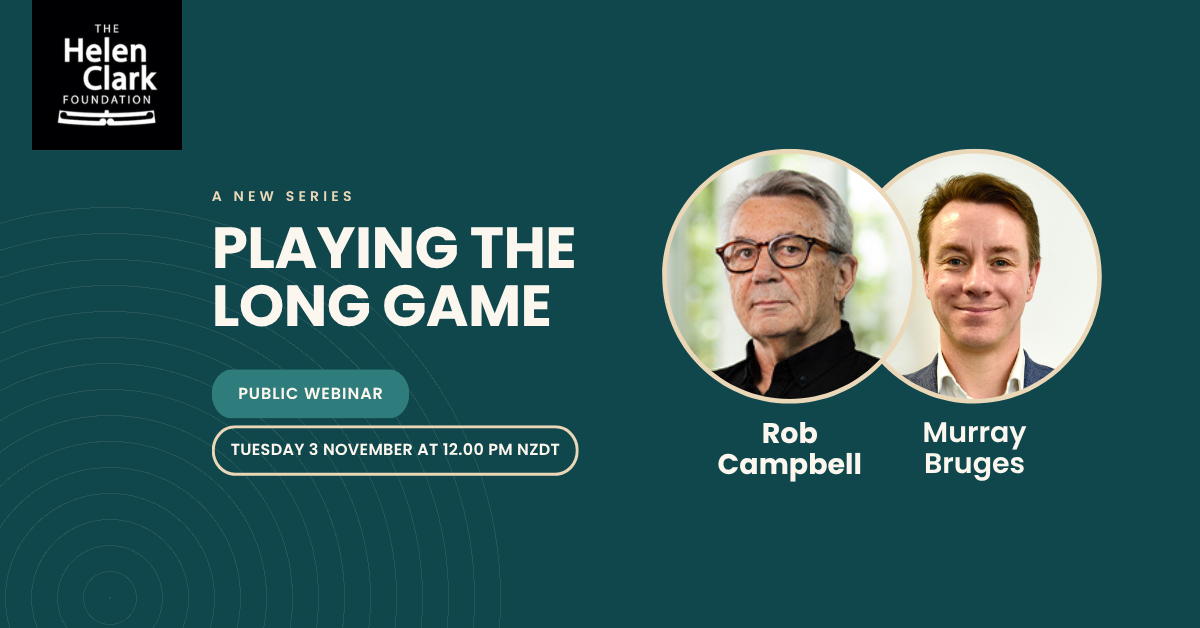
Playing the Long Game is a new webinar series from the Helen Clark Foundation bringing together some of New Zealand's most experienced political, economic, and public-sector leaders to ask: how do we build policy that lasts?
3 November 2026 at 12:00
Online Webinar
New Zealand's biggest challenges- climate change, housing, infrastructure, an ageing population, and fiscal sustainability- all demand thinking in decades, not electoral cycles. Yet our political system is increasingly focused on the short term.
Playing the Long Game is a new webinar series from the Helen Clark Foundation bringing together some of New Zealand's most experienced political, economic, and public-sector leaders to ask: how do we build policy that lasts?
Our next guest is Rob Campbell, the Chancellor of Te Wānanga Aronui o Tāmaki Makau Rau (Auckland University of Technology), Chair of NZ Rural Land Co, and Advisor to BBM. Rob is one of New Zealand's leading directors, with over 40 years' experience. He is committed to seeing Aotearoa take a leadership role in the field of emissions lowering energy innovation and commercialisation, and is passionate about improving diversity and inclusion, promoting sustainability as a core value, and creating equality in the organisations he is involved with.
Join Foundation director Murray Bruges for the next conversation in our series on how to get more long-term thinking and action into New Zealand’s politics and public policy.

The Impact of Your Support
Your support makes everything we do possible - from producing new research and policy ideas, to hosting our honorary fellows programme, to running public events and member-only webinars that bring people together for meaningful conversations about New Zealand’s future.
37+
Major Reports Published
90+
Events Hosted
50+
Significant Media Appearances in 2025
12,500+
Individuals engaged with our Research