
Arts Funding: Rt Hon. Helen Clark's address to the Foundations for the Future Forums
Helen Clark sets out how we could address issues in arts funding in Aotearoa New Zealand
Helen Clark Foundation
3 October 2026
The following is a transcript of the Rt Hon. Helen Clark's address to the Foundations for the Future Forum in New Plymouth, 3 October 2026.
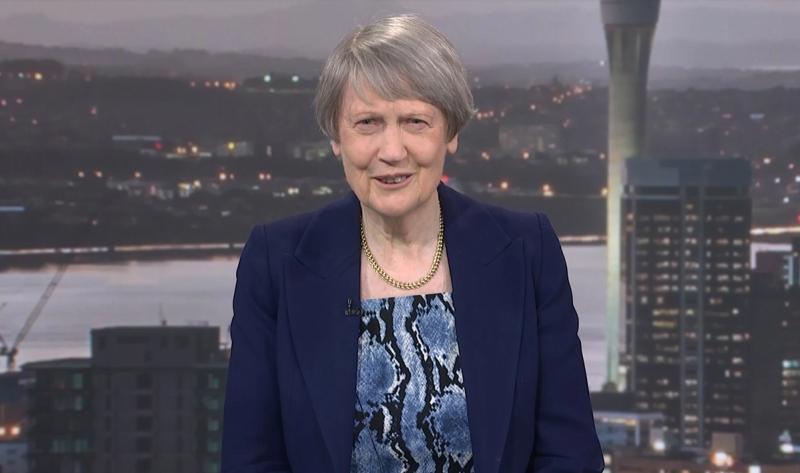
Greetings to everyone gathered in New Plymouth for this important forum. I am truly sorry not to be with you in person, but with a flight out to Europe this evening, I am anchoring myself in Auckland today in this changeable spring weather.
This forum brings together governors of art foundations and trusts, patrons, and gallery and museum directors. Together you have tremendous expertise on and experience with our galleries and museums, how they are funded, and why they should be funded.
Our host, the Govett-Brewster Foundation, for example, has a longstanding partnership with the Govett-Brewster Art Gallery. The partnerships which helped add the Len Lye Centre to an already fine gallery are good examples of what philanthropic support can help to achieve.
It’s worth noting that when Lonely Planet named Taranaki as its second-best regional destination in the world, it named the Len Lye Centre as an “unmissable experience” and as “Taranaki’s answer to the Guggenheim in New York”. It’s an irony perhaps that Len Lye’s work is in the permanent collection of the Whitney Museum of American Art in New York!But what that Lonely Planet ranking tells us is that when we invest in our gallery and museum infrastructure and collections, the economic benefits are very tangible for our country.
Then there are the intangible benefits. I have spent a lot of time thinking about how a small country tells its story to the world and to itself. The arts are so central to that. A country's sense of itself owes so much to its stories, images, and treasures. Many of our artists also reflect the landscapes and communities we love in their work.
In Creative New Zealand's national survey in 2023, 63 per cent of New Zealanders agreed that the arts help define who we are as a country, and 62 per cent said that the arts should receive public funding. Both of those numbers were up by over ten points since 2014. I find this tremendously encouraging.
When, as Minister for Arts Culture and Heritage, I successfully made the case to a finance minister for funding for the arts, that case rested on two foundations.
One was to recognise the love for and interest in the broad arts, culture, heritage, and crafts space which New Zealanders have. The numbers of us who engage with that space are generally rather higher than for those who engage in sport, contrary perhaps to popular perception.
The other foundation was the economic case for investment. The Ministry for Culture and Heritage estimates that the arts and creative sector's contribution to our GDP for the year to 31 March 2024 was $17.5 billion – that was 4.2 per cent of total GDP. By way of comparison, forestry contributes less than 1.5 per cent.
The reality is that around our country, our galleries and museums do for their communities what the Len Lye Centre has done for Taranaki. They attract visitors from near and far to see our collections and exhibitions, and to know more about our stories. Te Puke Ariki, close to where you are meeting today, is itself a superb example of story-telling. If we think of the global landscape, we immediately recognise the benefit of arts and cultural institutions to their local and regional economies from New York to London, Paris, and far beyond.
Funding for our galleries and museums has long needed broad-based partnerships. These have brought together the support of local government, local trusts and philanthropy, specific community fundraising, and central government support for the bigger projects.
As Minister for Arts, Culture, and Heritage for nine years, I often said that central government’s role was important, but as a partner and not as the dominant funder – except for the national cultural institutions which are Crown entities – like Te Papa. In 2000, I created the Regional Museums Policy for Capital Construction Projects which supported the refurbishment of many galleries and museums. Without a central government contribution, many would have struggled to reach their fundraising targets.
But the partnership funding model we have long relied on is under pressure. For example, local government is facing structural change, and rates caps have been proposed. This creates considerable uncertainty about future funding for both operating spending and capital works in the arts.
Central government funding has also tightened. As well, cost-of-living pressures are likely affecting the capacity of smaller, regular donors to give as they once did.
I am sure that there will be plenty of conversation about these pressures over the course of this forum – and that will inevitably lead to discussion of the role of philanthropy. It has been particularly important for acquisitions and capital investment - the kind of spending which allows a collection to grow and which is hardest to fund from operating budgets alone.
Governments of all stripes have long recognised the important role of philanthropy more broadly and have incentivised private giving accordingly. Philanthropy is also seen to have a value to society beyond the dollar figure of what is given.
There is now an opportunity to boost philanthropic giving in many societies, including our own. We are living through what analysts believe will be the largest transfer of wealth between generations in history. It is estimated that US$124 trillion will transfer between generations globally by 2048, of which around US$18 trillion is expected to go to charitable causes.
Governments elsewhere facing constrained budgets are increasingly asking how policy settings can encourage more of that wealth to flow to public benefit rather than remaining entirely in private hands. New Zealand should be asking the same question, including in relation to our galleries and museums. The proposed cap on tax deductibility for donations proposed in the last budget would be a step in the wrong direction, and should be dropped.
New Zealand could, for example, consider a cultural gifting programme which provides tax credits or deductions for donations of works of art and other culturally significant items to public galleries and museums. Since 1978, Australia has allowed donors to deduct the market value of a gift against their taxable income, spread over up to five years, with no capital gains tax payable on the donation. Similar schemes operate in Canada, the United States and elsewhere. New Zealand, unusually among our peer countries, has no such scheme.
Acknowledging that gap in policy is why a researcher at The Helen Clark Foundation, with the support of generous funders, is exploring the case for New Zealand introducing a cultural gifting programme and the form it could take.
Our early engagement with the sector suggests that there is a real appetite for a scheme of this kind, provided it complements rather than substitutes for existing funding streams. Done well, a tax credit could encourage more New Zealanders, including those on both sides of the wealth transfer I have just described, to offer significant artworks and other cultural items to public collections, rather than defaulting to private sale, or simply leaving them unseen in storage or on private walls.
While my Foundation’s research was under way, the Government announced that plan to place a cap on the value of cash donations eligible for the existing donation tax credit, to be set at $100,000, from April 2027. Inland Revenue's own estimate is that the change would affect around 350 donor entitlements - roughly 0.1 percent of all donors. The proposed change has caused consternation in the arts sector where particularly generous benefactors make a huge difference to the ability of institutions to operate and to grow.
If a $100,000 cap were also applied to a future cultural gifting programme, it would significantly undermine its usefulness. The value of the works we are talking about - a significant painting, a sculpture, or a considered private collection built over decades - will often run well beyond that figure.
Many of New Zealand's generous supporters may well keep giving regardless of the tax treatment. Nonetheless, international evidence shows that tax incentives do increase giving, both at the margin and sometimes substantially. We should not act in ways which would undermine vital sources of funding for the arts, especially when central and local government funding is under strain.
I hope there will be many ideas emerging from this weekend’s forum about how to ensure funding for our galleries. They play an essential role in our communities as guardians of collections and through hosting exhibitions and discussions which variously excite, inspire, and challenge us. They are at the heart of our cultural life, and they engage our visitors too.
What foundations and philanthropy in general do to support our galleries is critical for them both to survive and thrive. Galleries are not marginal to life in New Zealand – they are part of what makes life worth living.
I wish you all a productive forum, and I hope that the Helen Clark Foundation's forthcoming report on cultural gifting will be a useful contribution to thinking about future funding paths.
Thank you.
Keywords
The Impact of Your Support
Your support makes everything we do possible - from producing new research and policy ideas, to hosting our honorary fellows programme, to running public events and member-only webinars that bring people together for meaningful conversations about New Zealand’s future.
37+
Major Reports Published
90+
Events Hosted
50+
Significant Media Appearances in 2025
12,500+
Individuals engaged with our Research