
Research
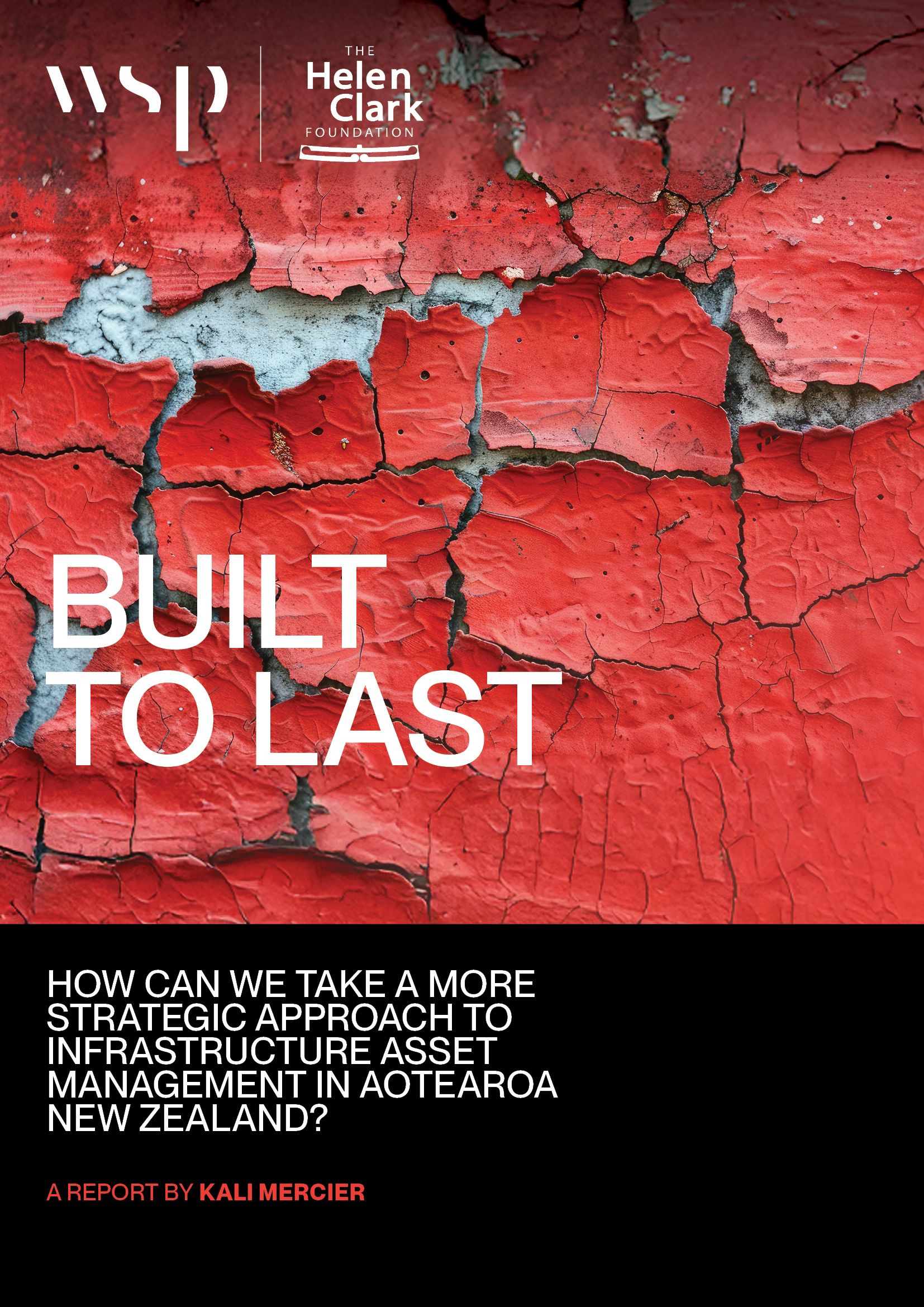
Built To Last
How can we take a more strategic approach to infrastructure asset management in Aotearoa New Zealand?


Kali Mercier
4 June 2025
This report by WSP and the Helen Clark Foundation warns that many of our mounting infrastructure challenges stem from a preventable lack of basic upkeep of assets.
‘Built to Last: How can we take a more strategic approach to infrastructure asset management in Aotearoa New Zealand?‘ highlights the long-standing ‘build and forget’ mindset — where vital infrastructure is built but not adequately maintained.
Building for the future means caring for what we have today
One of the core issues highlighted in the report is that infrastructure upkeep funds — collected through rates, taxes, and user charges — are often diverted to new projects rather than reinvested into maintenance.
The report calls for fundamental changes, including ring-fencing renewal funding, increasing transparency, and ensuring infrastructure investment decisions consider full asset lifecycles rather than just upfront costs. It urges central government to lead by example by maintaining comprehensive asset registers and strategic management plans.
All too often, decisions are made without knowing what infrastructure exists, what condition it’s in, or when it needs renewal. The lack of a full asset lifecycle view in decision-making is proving short-sighted and costly.
With as much as 99 percent of the infrastructure that Aotearoa New Zealand will require over the next 30 years already in place, taking a more strategic approach to maintenance isn’t just sensible—it’s essential.
The report challenges the tendency to chase the lowest price, arguing that saving money now by skipping basic upkeep simply leads to greater costs in the future.
Why does this matter?
Without proper maintenance and appropriate budgeting for renewals, we’re forcing early rebuilds, creating massive inefficiencies, and reducing the reliability and lifespan of our infrastructure.
We’re effectively borrowing from the future by underfunding renewals today. That’s a shortsighted and financially risky move, compromising the infrastructure quality we depend on today and for generations to come.
Report recommendations include:
- Make investment decisions about infrastructure assets over their full lifecycle, rather than prioritising a consideration of upfront costs.
- Central government should lead by example, maintaining asset registers and developing strategic asset management plans.
- Improve assurance processes and increase public scrutiny to drive compliance with best practice.
- Invest in workforce capability to ensure we have the skills to manage infrastructure well.
- Improve our understanding of the performance and condition of existing assets, to better inform strategic decisions.
- Ring-fence funding for renewals or publicly justify why it isn’t being done.
- Increase transparency around maintenance spending, including a clear breakdown of proactive vs reactive maintenance.
The press release for this report is here.
This report builds on work done in our previous report, Bridging the Infrastructure Gap, which looked at sustainable, equitable long-term solutions to funding and financing infrastructure development in Aotearoa New Zealand. You can read that report here.
Latest Media:
- NewstalkZB: Report reveals "a lot of gaps" in NZ's infrastructure best practice (June, 2025).
- NBR: Central and local government must manage assets better: report (June, 2025).
- NZHerald: NZ infrastructure faces crisis as maintenance lags behind - Kali Mercier (August, 2025).
- WSP: WSP supports National Infrastructure Plan’s long‑term vision for infrastructure (February, 2026).
Keywords
Enter your details to download:

The Impact of Your Support
Your support makes everything we do possible - from producing new research and policy ideas, to hosting our honorary fellows programme, to running public events and member-only webinars that bring people together for meaningful conversations about New Zealand’s future.
37+
Major Reports Published
90+
Events Hosted
50+
Significant Media Appearances in 2025
12,500+
Individuals engaged with our Research