
Emergency planning: New Zealand needs one plan for roads, rail, ports and air
Kali Mercier and James Koudounis argue that a single, long-term plan across all transport modes would leave our regions much less exposed

Kali Mercier, James Koudounis
14 November 2026
This piece was originally published in the New Zealand Herald.
Every year, around 6000 slips, floods, and tremors damage New Zealand’s state highways.
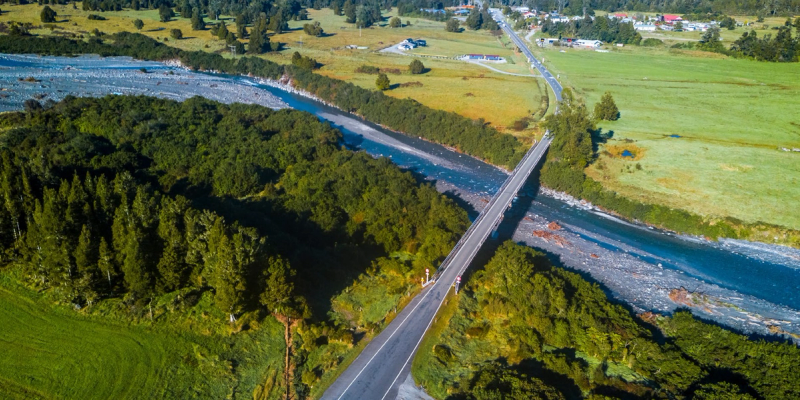
For most of us, that’s an inconvenience. For regions such as Tairāwhiti, the West Coast and Northland that are heavily reliant on one key road, such events mean missed hospital appointments, lost income, and long detours. In the worst-case scenarios, it can mean complete isolation for days, or even weeks.
The regions matter to us all. They deliver fresh food to our supermarkets, and earn much of our export income – dairy, horticulture, forestry. But they depend on reliable roads, rail, ports and air links to reach their markets. The same networks connect communities to healthcare, education, work and family.
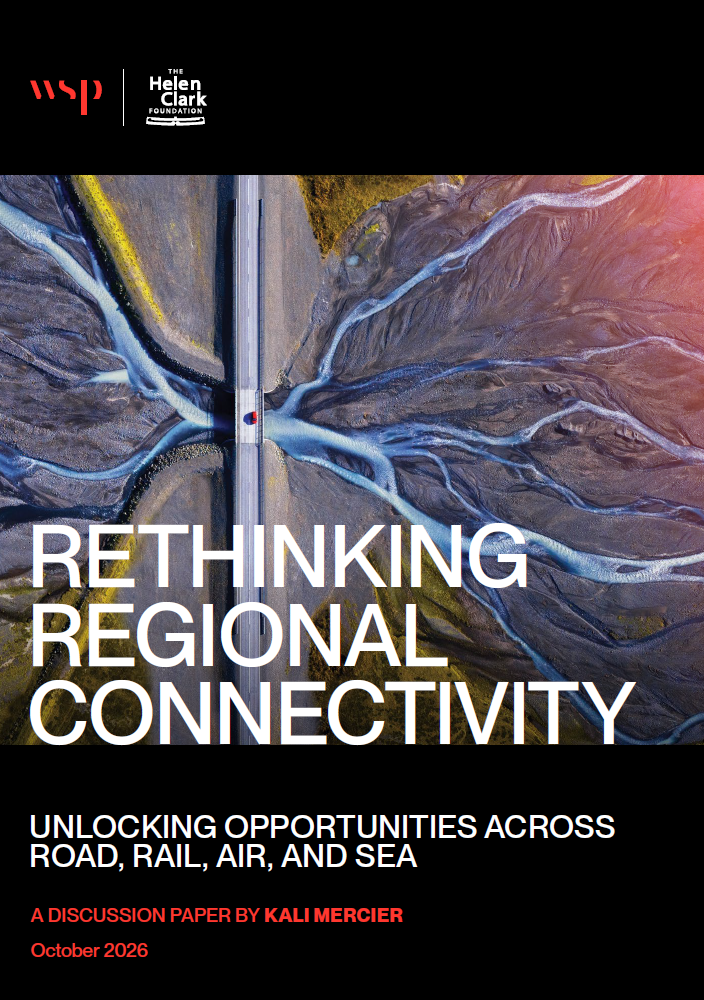
A new report by Helen Clark Foundation and WSP, Rethinking Regional Connectivity, starts from an uncomfortable truth: our networks are more vulnerable than we may think. New Zealand has a substantial economic engine in its regions, but weaknesses in the transport network leave that engine, and the country, exposed.
And the pressures are mounting. The country faces growing fiscal constraints on transport investment due to increasing costs and competing demands for investment in other types of infrastructure such as healthcare. Meanwhile, many regions are grappling with how to maintain transport networks to a high standard with a smaller rates base and proportionally more older residents on fixed incomes. That makes it all the more important that every dollar is spent as efficiently as possible.
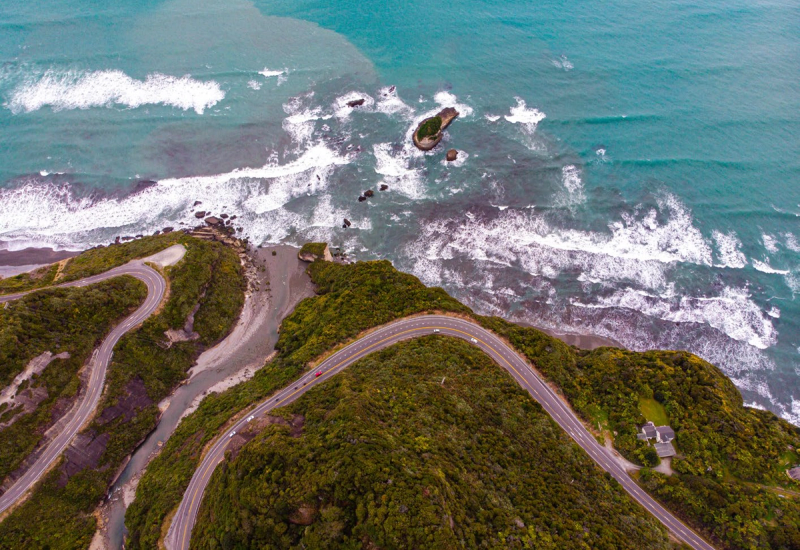
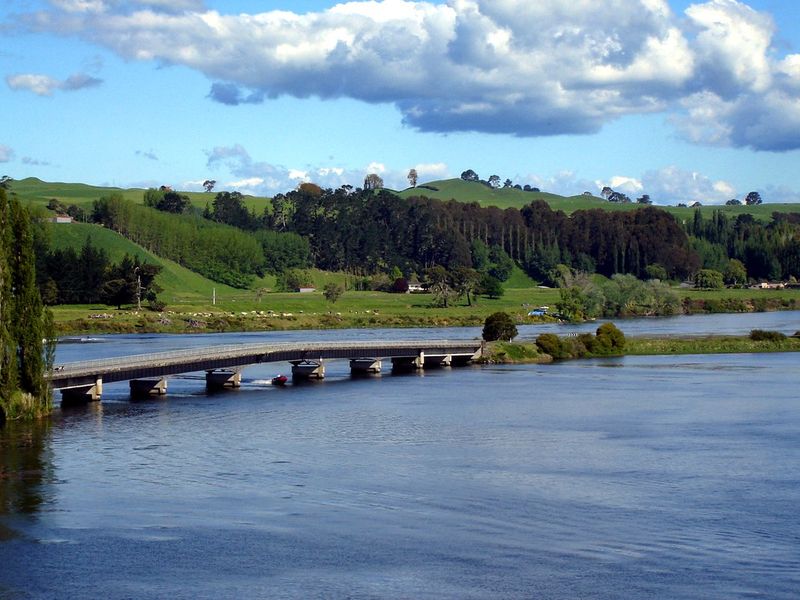
Tairāwhiti is a good example of those vulnerabilities. The region is one of the most remote in New Zealand, sparsely populated, but with a sprawling road network to maintain. The region has young, unstable geology and no rail, leaving a primary production economy heavily dependent on slip-prone roads. One consultant we spoke to described his job as “like building roads on sandcastles”. Forestry slash is also a particular issue, regularly taking out bridges during flood events.
Recent weather events, including Cyclone Gabrielle, demonstrate how easily the population can become cut off from the rest of the country, leaving local communities vulnerable and isolated, and impacting businesses. A recent report by Trust Tairāwhiti calculated it costs the community more than $1 million each day when the Waioweka Gorge is closed – and that happens regularly.
Some key issues emerged in our research when considering Tairāwhiti and other remote regions. First, transport decisions in the regions should start with the outcomes each community wants to achieve. Rather than examining projects in isolation (a new road, new port infrastructure, an improved airport), we should be thinking about how to improve productivity, resilience, and accessibility for local communities, and looking to enhance transport connectivity in a mode-agnostic way to achieve those goals.
This is not to imply there is a lack of strategic thought around transport in this country. Considerable strategic thought is applied to road transport in particular. Gaps lie where road transport, ports, aviation and rail intersect. When we do think across modes (within regions for example), no agency at central government level has a clear remit to then turn this into strategy and investment. This is because each transport mode is governed separately and according to its own logic.
NZTA is responsible for state highways and provides oversight of budgets for road and rail, but only has a mandate to develop strategy for land transport. At the local level, 69 road-controlling authorities manage their respective parts of the road network.
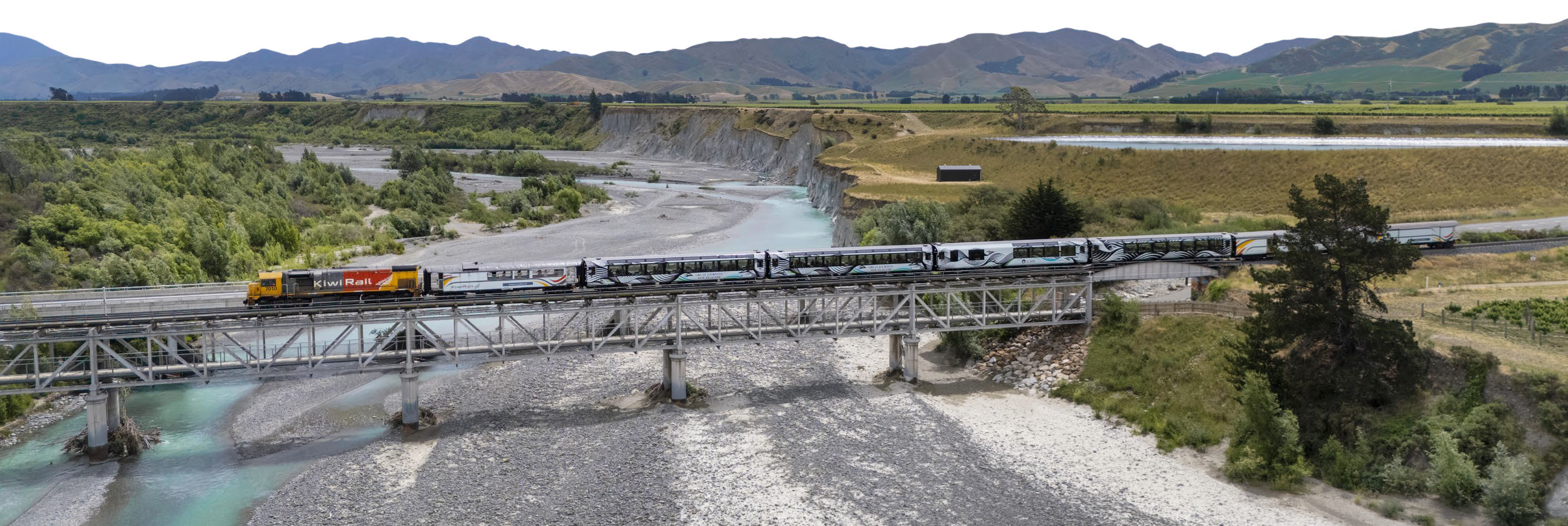
KiwiRail manages the railway network and carries freight – but as a State-Owned Enterprise it is expected to operate as a business. This means rail has different incentives to road investment, despite the public benefits it offers. Meanwhile, no single agency is responsible for investigating the costs and benefits of long-distance inter-regional passenger rail, meaning its potential has never been assessed systematically.

Most airports are owned by councils – with some part-owned by the Crown. Airports are funded by user fees from airlines, often with top-ups from local ratepayers, but without the consistent support of a national funding framework. Faced with a weak dollar and rising fuel costs, smaller airlines – all run commercially – are under increasing pressure to reduce the number of regional routes they serve to remain viable. Losing an air route can be devastating for local communities.
Ports are also mostly council-owned, but have been set up to compete against each other rather than working as a system. This creates incentives for investment decisions that may make sense for individual ports but may be less efficient from a national perspective. Meanwhile, our domestic coastal shipping has shrunk to a handful of vessels, and moves only around 3.5% of our total freight. This makes us vulnerable to the decisions of international shipping companies: with skyrocketing fuel costs, there is a real risk that some companies may rethink the long journey to New Zealand.
Because each mode is planned separately under different remits and incentives, a decision about whether to build a major new road will not typically consider whether a new rail line would bring similar or better productivity or resilience benefits to the region. Similarly, a decision about whether to improve a local airport may consider the importance of access to healthcare, but not whether subsidising inter-regional public transport could do a similar job, for less money.
New Zealand needs a long-term, mode-agnostic plan for moving people and goods around the country. A first step would be to give a central agency a clear remit to plan across all modes, not just land transport. That planning could sit within a national spatial plan - as South Korea has done through five successive national plans since 1972. Its Comprehensive National Territorial Plan sits at the top, supported by regional, city and sector plans that address all transport modes. The current plan shifts the emphasis from building new infrastructure to managing and making better use of what already exists, and treats climate extremes and earthquakes as core planning problems.
As well as co-ordinating investment more efficiently, we can get more from each mode. For example, moving more freight on to rail and ships would cut emissions, and ease pressure on fragile roads, saving significant sums on road maintenance. Similarly, properly investigating the costs and benefits of passenger rail would help settle the question of which routes are viable based on the evidence rather than on politics.
Alongside rail, policies that strategically lift port productivity and grow domestic coastal shipping would give us more control – and another way to move goods around the country when roads fail.
In aviation, we should be identifying which key routes we consider to be essential for regional connectivity, and then supporting those routes to remain viable, as many other countries do.
Air provides a crucial connection for many regions, especially to specialist healthcare, but it is also emissions-intensive (as are roads). Transport now accounts for 18% of New Zealand’s emissions. The question is what role we need air travel to play in an integrated transport system, and how we make that transition.
As a country, we need to be pushing for a zero-carbon future, and investing in technology that will help to reduce those emissions. It makes no sense to leave this crucial transition to small commercial airlines that are already struggling financially.
We also need to talk about who gets left behind. Transport poverty – being unable to afford or access the transport you need to live well – is now an urgent public health issue. This year’s fuel price spike has made it worse. The average household spends nearly 16% of its budget on transport, and around 5% of households have no access to a vehicle. Many low-income people cannot afford to access crucial services as a result. There are practical fixes: from providing better inter-regional public transport, to improving incomes, to expanding remote and digital delivery of services.
Finally, when it comes to maintaining and improving resilience in our transport system, there is a difficult question to consider: what does good look like?
With the impacts of climate change increasingly apparent, and the near-certainty of another major earthquake hitting in the coming decades, it is simply not realistic to expect that all parts of the country will remain connected at all times.
What we can do though, is focus on minimising the impact of closures by reducing the odds of every land route failing at once, shortening how long closures last, and building enough redundancy across transport modes that a single event does not cut off a region completely.
For many exposed regions, the biggest resilience gain is likely to come from protecting and improving the assets they already depend on. Consistent, predictable spending on proactive maintenance, renewals and slip prevention is a crucial part of that. Improved redundancy (a new rail link, a deeper port) should also be considered where it is realistic and affordable.
With significant reforms underway at both central and local government levels currently, this is an ideal time to start a conversation about regional transport connectivity. Moving towards more joined-up thinking across modes could pay significant dividends for the regions - and for the country as a whole.
The report is available here.
Kali Mercer is deputy director and WSP Fellow at the Helen Clark Foundation. James Koudounis is head of Transport Infrastructure at WSP New Zealand.
Keywords

The Impact of Your Support
Your support makes everything we do possible - from producing new research and policy ideas, to hosting our honorary fellows programme, to running public events and member-only webinars that bring people together for meaningful conversations about New Zealand’s future.
37+
Major Reports Published
90+
Events Hosted
50+
Significant Media Appearances in 2025
12,500+
Individuals engaged with our Research